Human Impact

assa250.jpg

Strasal Scholar Channels Love of Biology Into Cutting-Edge Stem Cell Research

Assa Sherman loves biology. He remembers the sense of awe learning about the miniscule processes that underly life during high school.

Read More
"Each cell contains the exact same DNA,” he says. “But the fact that each cell expresses different genes, leading to the synthesis of different proteins, which then determines the cells developmental fate and function – is simply magical.”


Assa in the lab: “I’m very lucky”

Assa became the first in his family to pursue a university education when he enrolled in the Hebrew University’s undergraduate program in chemistry and biology. He participated in an honors program, which is how he met Hebrew University Prof. Nissim Benvenisty, who is a leading expert in stem cell biology. “I knew I wanted to be part of that field and part of his research group,” Assa recalls.  

Assa decided to continue to a master’s degree, and was thrilled to be chosen to receive funding from the Strasal Foundation.

          The support I received from the Strasal Foundation enabled me to dedicate my time, and focus my mind, solely on my research!

He was studying human pluripotent stem cells, which exist in the early days after fertilization. Their unique capacity to differentiate into any cell in the human body makes them superior for modeling human development and disease and a key for regenerative medicine. “I knock out different genes and compare the outcomes,” Assa explains. “Sometimes these alterations result in rapid cell multiplication, while other changes reduce proliferation or even in cell death. This process helps me identify the functions and the essentiality of different genes in the embryonic stage”.

Assa recently transferred to the direct PhD track in Prof. Benvenisty’s lab. “I’m very lucky,” he reflects. “Prof. Benvenisty’s dedication to his students knows no boundaries. He is immensely invested in his students’ success and wellbeing. He guides, helps, challenges, and supports me.”

For his doctoral research, Assa is studying a specific type of genes that do not translate into protein, but rather act through their RNA molecule. This subset contains ~3,000 genes, about which little is known. He has characterized a number of these genes and is even about to introduce new genes to the scientific community. The applicability of his research is immense. Assa’s work is crucial for our understanding of early human development and will be key to developing better cell therapy and diagnostic tools, along with improving human health and healthcare in the future.

Assa greatly enjoys studying at the Hebrew University, where cutting-edge research is so integrated into the curriculum, making him a better scientist. In addition, he is thankful for his scholarship, which enables him to dedicate all his time to research and his academic skills.

“Studying in Jerusalem, at the Edmond J. Safra campus, is like nothing else. The campus is surrounded by national institutions and offices, reminding me on a daily basis that we too are part of Israel’s national heritage.”

Published: June 2, 2024
Read Less
teff 250

Teff Love: Seeds for Humanity

Most eleven-year-olds ride bikes. But Shiran Ben-Zeev was different.
Read More


At eleven, he was driving a tractor through his family’s wheat fields and almond orchards. It was only natural that he’d choose to study plant sciences at Hebrew University. During his undergraduate studies, he undertook a research project in Prof. Yehoshua (Shuki) Saranga’s lab. One day, Shiran was summoned to take a look at a fellow student’s teff field – one agronomist helping another.

This field trip was the first step in what has become an eight-year journey for Shiran. Teff, a native Ethiopian grain, was brimming with promise: a nutritious crop that could grow through the hot, dry Israeli summer. Shiran was hooked. He began a master’s degree at the Institute of Plant Sciences and Genetics in Agriculture, working under the guidance of Prof. Saranga, studying 400+ varieties of teff seeds that had been sitting in a vault since the 1970s. Planting a subset of the seeds in study fields in different climates, he identified the varieties’ core traits and how the environment affected their growth.

teff 250
Shiran Ben-Zeev (Photographer: Neta Levinson)

Yet soon a problem arose. For no apparent reason, some teff plants permanently bend over. Lodging, as it is known, causes dampness and mold, reduces growth, or simply places the seeds out of reach for mechanical harvesting. Ready to tackle this challenge, Shiran transferred to the direct PhD track.

Shiran is employing a three-pronged approach: identifying the ideal depth and density for planting seeds, studying teff’s genome, and comparing how root size and structure affect lodging.

Only a small number of researchers worldwide study teff, and Shiran’s work has overturned a number of assumptions. He surveyed an unprecedented number of varieties, developed best practices for planting, and has shown that teff has a potential yield twofold higher than previously thought.

In his spare time, Shiran hosts the Robert H. Smith Faculty of Agriculture’s podcast, HaHakulta, and looks forward to his postdoctoral appointment at the US-Israel Agricultural Research and Development Fund (BARD).


“I greatly enjoy the environment at the Smith Faculty. Many of the professors come from a farming background themselves – it feels like peer-to-peer learning. We all want to improve Israeli agriculture.”


Published: December 15, 2022
Read Less
Hebrew University AI Alliance

Hebrew University Joins Meta-IBM Global Initiative for AI Innovation

The Hebrew University of Jerusalem proudly announces its participation in the launch of the AI Alliance, a pioneering collaboration between global industry, academic, research, and government organizations.

Read More

Set to take place on Tuesday, December 5, this initiative aims to revolutionize the landscape of AI innovation.

The formation of the AI Alliance is spearheaded by IBM and Meta, joined by a consortium of leading organizations spanning industry, startups, academia, research, and government. This coalition is dedicated to supporting open innovation and open science in AI, recognizing the transformative potential of AI advancements and committing to fostering transparent innovation.

In an ever-evolving technological landscape, AI promises to enhance various aspects of our lives. The AI Alliance intends to harness these advancements responsibly, prioritizing safety, diversity, economic opportunities, and societal benefits. Collaboration and information sharing are paramount to catalyze innovation, mitigate risks, and ensure that AI products align with global needs.

President Asher Cohen of Hebrew University remarked: “Joining the AI Alliance marks a pivotal moment for Hebrew University, where collaboration meets innovation. We're thrilled to be part of this coalition driving the future of AI, fostering open technologies, nurturing talent, and championing ethical, trusted AI practices. Together, we'll forge pathways for global education, build robust frameworks, and advocate for policies that nurture a vibrant, open AI ecosystem. This alliance is a beacon illuminating our commitment to shaping a responsible, inclusive future powered by the boundless possibilities of artificial intelligence.”

The AI Alliance is dedicated to several pivotal goals, including creating benchmarks, evaluation standards, and tools essential for responsible AI deployment. By uniting a diverse coalition of supporters, the Alliance aims to drive forward responsible AI development while prioritizing safety, ethics, and governance in its deployment. Emphasizing the maximization of AI benefits across science, business, and society, the Alliance promotes open innovation that serves the greater good, underscoring responsibility and inclusivity.

Its overarching mission is to cultivate an open community that empowers developers and researchers to accelerate responsible AI innovation, ensuring robust scientific rigor and trustworthiness in the field. The Alliance plans to undertake various projects, including deploying tools for responsible AI development, establishing evaluation standards, supporting open foundation models, advancing AI hardware accelerators, global AI skills building, educational initiatives, and events showcasing responsible AI use cases.

Open innovation in AI democratizes access to groundbreaking advancements, harnesses global innovative talent, ensures accountability, fosters transparency, and enables robust testing and validation. Hebrew University is committed to contributing to this transformative initiative, promoting open innovation that benefits both technology providers and consumers.

Published: December 5, 2023
Read Less
danoch_blog_250.png

Empowering Students to Make a Difference

Gal Danoch is studying an accelerated BA-MA program, earning a bachelor’s degree in geography and Middle Eastern studies and a master’s degree in urban planning.

Read More

Currently in the last year of his undergraduate studies, Gal is generously supported by the Israel Scholarship Education Foundation (ISEF). “Neither of my parents had a college education,” Gal says. “A friend told me about the ISEF program, and I applied.”

“My parents always wanted me and my siblings to get an education, and thanks to ISEF, this is possible. I’m fortunate and thankful to have been chosen for the scholarship.”

Gal Danoch, ISEF recipient

Gal grew up in Ashkelon and had been active in Hashomer Hatzair, an Israeli youth movement. He continued down the path of informal education during his gap year, his miliary service, and beyond, when he moved to Jerusalem and trained as a tour guide, earning a license to lead school outings.

ISEF scholarship recipients are required to volunteer, and thus it was no surprise that Gal chose to mentor two high school students through the Bridge to Academia program. The following year, Gal became the program’s coordinator. “For the first time, I had a system-wide perspective. I had to deal with a lot of bureaucracy, but I gained confidence and learned to recognize my abilities.”

Bridges to Academia holds an annual, program-wide volunteer day, but Gal decided to take a less centralized and more empowering approach. Working in small groups, mentors and mentees chose and coordinated their own volunteer projects. “I offered guidance, but the success is truly theirs. One group volunteered with the homeless, another group went to a senior’s home. Each group picked something relevant to them.”

In addition to his ISEF responsibilities, Gal impacts Jerusalem in other ways. Last summer he volunteered to teach a 12-part Hebrew language course that a friend organized at the Shuafat community center in East Jerusalem. “The Hebrew course expanded the students’ personal and social viewpoints, by meeting the ‘other,’” he reflects. “It also opened their eyes – and my eyes – to the importance of Hebrew in obtaining higher education and quality employment.”  

Published: July 25, 2023
Read Less
public_health_blog_250.png

Public Health as a Common Good

Prof. Aron Troen believes that the role of a democratic government is to ensure the health, wellbeing, and the rights of all members of society.

Read More
This may take form of protective laws, regulations, and providing opportunities for legal recourse. As a professor in the Department of Biochemistry, Food Science and Nutrition, and with an impressive resume of research focused on the connection between nutrition and the brain, he is now turning his attention to the question of nutritional security as a basic human right.

“We need to ensure that our food system is both fair and equitable, but 3 billion people worldwide cannot afford a healthy and sustainable diet.”

Prof. Aron Troen

Often, people’s diets are not a question of choice, but of circumstance. In Israel for example, the lowest quintile (20%) would have to spend 2/3 of their income to make healthy food choices. Poor diets result in a variety of maladies, with society (taxpayers) shouldering the cost down the line—hospitalization, lost productivity, children not realizing their full potential.

This is precisely why Prof. Troen loves being at the Hebrew University. “As a publicly funded institution, we have the responsibility and opportunity to care for the public—and this means public health,” he says. “As scientists, we must foster reasoned research-based debate and policy development around such issues. One way is to use our convening power; to bring together stakeholders, transcend politics, and focus on achieving individual and societal needs.” In other words, organizing conferences and symposia. Over the course of the last year, Prof. Troen was involved in leading a number of such international conferences.

He helped organize Food Insecurity – The Continuing Pandemic: Toward Sustainable Food Systems for Israelwhich took place at the Israel Academy of Science and Humanities. The event hosted a number of experts from abroad, including Prof. Dan Glickman, who served as the US Secretary of Agriculture under President Clinton. Based on the success, Prof. Troen worked on two additional conferences, all action-oriented and combining science and policy.

The first converence was the two-day Batsheva de Rothschild Workshop, Avoiding the Coming Food Security Crisis: Novel Solutions at the Intersection of Agriculture, Environment and Health. Multidisciplinary stakeholders from four continents traveled to Israel to advance an evidence-based understanding of how governments, NGOs, organizations, and companies can best address looming food security challenges in Israel and worldwide.  

The second converence was a mini-symposium organized and hosted  by Prof. Troen at Hebrew University’s Robert H. Smith Faculty of Food, Agriculture and Environment: Science and Measurement in Food Security PolicyIt brought together experts from the United States and Israel, including a wide range of stakeholders: members of Israel’s National Nutritional Security Council, governmental and civil service professionals, and civil society members. The goal was to examine and develop methods for mapping and addressing food insecurity—not only asking what is known, but how we know it—how is data collected and analyzed, and what barriers exist to better evidence-based practice and policy?

“I measure success as good public health, not monetary wealth.”

But health and wealth mustn’t necessarily conflict—data from the United States has shown a $2 return for every $1 invested in food security. Thus, it is possible to develop evidence-based policies that generate sustainable, environmental, and healthy solutions that are both equitable and financially and politically feasible.

Thanks to Prof. Troen and his colleagues, Hebrew University is sounding the alarm, while also offering guidance on how to best move forward. 

Published: July 26, 2023
Read Less
Mona and Sara

Harbingers of Change: Women Leading the Way

The Hebrew University was recently pleased to welcome two inspiring women, both University alumnae, into its leadership.

Read More

Prof. Mona Khoury was appointed Vice President of Strategy and Diversity, and Prof. Sara Cohen was named Dean of the Rachel and Selim Benin School of Computer Science and Engineering.

In 2016, only 18% of Hebrew University professors were women. Today the number stands at 22.8%  a slight improvement. We hope that Prof. Khoury and Prof. Cohen are harbingers of changes to come – increasing the representation of women at Hebrew University. Scopus sat down with them to ask about their path into academia, their research, and how they are leading Hebrew University into the future.

Prof. Mona K and Prof Sara Cohen
Prof. Mona Khoury, left, and Prof. Sara Cohen

Before we start talking about the present and looking into the future, let’s talk about where it all began. Your decision to begin studying, and your choice to come to Hebrew University.

Prof. Mona Khoury: The Hebrew University of Jerusalem wasn’t an obvious choice for me. I knew I wanted to study. My parents, who didn’t have the opportunity to get a higher education, wanted me and my sister to go to university. I grew up in Wadi Nisnas, a disadvantaged neighborhood in Haifa. It really shaped my worldview. I wanted to work with people, to help people. I settled on social work. My parents preferred I stay close to home, but a relative who had studied at Hebrew University convinced them I’d be fine. Once I arrived in Jerusalem, I fell in love – with the campus, the students, the atmosphere. From the beginning, I knew I’d continue to a master’s degree, to increase my impact.

Prof. Sara Cohen: My interest in computers started early on, when I was in third grade and my father bought the family a computer. It was pretty early technology; personal computers hadn’t really taken off yet. I taught myself some programming. When it was time to choose a course of study, I enrolled in both mathematics and computer science at Hebrew University and participated in the Amirim Nature honors program. By the end of my first year, I had fallen in love with computer science and kept it as my only major. I was fortunate to be guided in my Amirim research project by Prof. Yehoshua (Shuky) Sagiv, who introduced me to the world of databases, which is still my focus today.

You both eventually decided to purse doctoral studies at Hebrew University. Can you share a bit about the people who guided you along the way?

SC: I originally had no thoughts of graduate studies, but Shuky was persuasive and convinced me to continue, and then to transfer to a direct PhD track. Shuky is a very caring person, a fatherly mentor for me. He truly believes in his students – as people, not only as researchers. I’d just given birth to my first child when I began my PhD studies and was worried about balancing research and family. He advised me to be fully present, whether at home or on campus, which was great advice – although not always easy in practice. Long before working from home was in style, Shuky helped and encouraged me to conduct my research wherever was more convenient for me.

Shuky also insisted that I travel to international conferences, to meet people and advance my career. He would cover the costs of flying out, presenting, and returning a day or so later, to make it easier for me and my growing family.

MK: Speaking of balancing an academic career and family life… I knew that a postdoctoral position abroad was necessary if I wished to obtain an academic appointment in Israel. I had secured Fulbright funding and a position in Chicago, but my husband couldn’t come for the entire year. I went alone, with our 11-month-old daughter. I put her in daycare. It wasn’t ideal, but I was at a critical point in my career.

Regarding guidance during my studies – back then, I didn’t fully understand what it meant to pursue an academic career. As a faculty member, and later, as the Dean of the Paul Baerwald School of Social Work and Social Welfare, I feel greatly responsible for directing and guiding my students from day one: mapping out their academic route, training them to write research proposals, instilling in them the skills to become top-notch researchers – with all that entails.

Let’s talk about your research. Could you explain your field to our readers?

MK: I got my academic start studying violence in schools – I adopted a new perspective in my doctoral studies, shifting the focus from the individual student to the larger context: the students’ characteristics, their neighborhood, the school climate, and family characteristics – exploring how these factors may simultaneously affect student behavior. My advisor, Prof. Rami Benbenishty, had just begun a project with Prof. Ron Astor (today at UCLA). It was exciting to be part of an entirely new field with a large sample size – 16,000 schoolchildren. To this day, I continue to study juvenile violence in a variety of contexts – schools, social networks (cyberbullying), and political violence.

SC: I study databases, which is essentially how we store, search, and extract data. My over-arching research goal is to make data access efficient, effective, and user-friendly. In particular, I am currently interested in diversity, fairness, and representativeness in querying. This is especially pertinent in the 21st century, the era of big data. The ability to identify sets of data items, within a huge set, in an unbiased manner, is crucial for enabling equitable use of this data later on.

This issue of Scopus focuses on leadership. Could you share the ways you are fostering the next generation of leaders at Hebrew University?

SC: Our main goal is to ensure that our students graduate with a deep understanding of the field of computer science and a top-notch skill set, so that they can become leaders in both academia and high-tech industries. As society increasingly outsources actions and decisions to machines, wider considerations come into play. True leaders must also understand how the algorithms they build affect the world at large. Recent real-life examples of discriminatory artificial intelligence are a case in point.

The Benin School of Computer Science and Engineering has an exciting undergraduate program called MATAR, Interfaces of Technology, Society, and Networks, in which students learn, among other topics, about the history and role of mass media, its impact, and ethical dilemmas. Our school also offers an undergraduate course in cyber law (taught by a retired judge), and a course on data revolutions from historical and social perspectives. I look forward to exploring additional ways to better equip our students to use technology to make the world a better place.

MK: It is so inspiring to hear that computer science students can take courses on the ethical, or human-centered aspects, of technology. Of course, caring for people and their well-being is the basis for social work.

My identity is multifaceted – I am an Arab, a woman, a mother, a researcher – and so much more. Of course, these identities intersect and affect each other. As Vice President of Strategy and Diversity, I am working to increase diversity – whether through subsidizing Arabic language classes, creating specific courses for fostering cooperation between students from different backgrounds, or celebrating Women’s Day by pairing up inspirational women from across the Hebrew University community, to get to know each other.

Thank you so much and best of luck in your new positions!

Published: April 17, 2023
Read Less
image

Advancing Systemic Change for Ethiopian Israelis

Born in Addis Ababa, Tirsit Legesse Bishaw remembers her community’s longing for Jerusalem. Not Israel, but Jerusalem, or Yerusalem, as Ethiopian Jews call the city.

Read More
Gradually, five of her older siblings made aliyah. When Tirsit was 11, her mother decided to reunite the family and made aliyah with her three youngest children. With her older siblings to take them in, Tirsit bypassed the experience of an absorption center. “I landed straight into Israeli society. It was an immersive experience,” she recalls.

During high school, she became interested in politics, foreign affairs, and diplomacy. With the yearning for Jerusalem running through her veins, she headed straight to Hebrew University and began studying political science. Over the course of her studies, Tirsit decided to continue her academic career in the field of criminology. She began her master’s degree immediately after graduating.

Tirsit Legesse Bishaw

Today Tirsit is the Vice President of Program Development and Partnerships at Olim Beyahad, an NGO that promotes the integration of Ethiopian Israelis into the workforce. She is leading the way, focusing on the education-academia-employment continuum, working to inspire young Israelis of Ethiopian descent to enter academia, while also encouraging universities and employers to level the playing field.

To this end, Tirsit has participated in various Knesset committee meetings, and is currently working on two projects: with the Ministry of Education, training talented teachers of Ethiopian descent so that they can advance into leadership positions. “There are currently 600 Ethiopian-Israeli teachers, but only two principals throughout the entire country,” Tirsit laments.

The second project, with the Ministry of Economy and Industry, is encouraging public and private sector employers to hire and promote Ethiopian Israelis. To date, nearly 1,300 people have graduated Olim Beyahad’s programs, and 87% of them have secured quality employment. “Each gainfully employed person is an inspiration to their families and communities,” reflects Tirsit. “I hope that by the time my children grow up, they won’t encounter any glass ceilings or barriers.”

“I’m a woman of Ethiopian descent with two degrees from Hebrew University. Wherever I go, I shatter stereotypes. I am proof that you can aim for the stars and succeed. At the same time, we need systemic change: creating opportunities for people from different backgrounds to realize their academic and professional potential.”

Published: April 17, 2023
Read Less
yonatan_golans.jpg

Growing the Entrepreneurial Spirit: Algae for a Hungry World

Yonatan Golan chose to study chemistry and physics at Hebrew University.

Read More
Although originally less drawn to physics, he found himself immensely enjoying the experimental side of his studies: following protocols and taking measurements in the lab, writing programs to analyze his data, and eventually developing and conducting his own experiments.

He surprised himself by deciding to continue his studies and pursue a master’s degree in physics. Although he struggled through the theoretical courses, he found reprise in his research, conducted in Prof. Eilon Sherman’s experimental biophysics laboratory. Yonatan studied T-cell membranes by observing the proteins on their surface, and eventually published his findings in Nature Communications. “Receiving such external recognition of my research really lifted me up, solidified my faith in my abilities.”

“My studies at Hebrew University helped make me who I am today. I gained crucial skills that are serving me as a scientist: critical thinking, understanding processes, analyzing data.

- Yonatan Golan (BSc Chemistry & Physics, MSc Physics)

For a few years, Yonatan and his brothers had been tossing around ideas about starting something together. One brother, Matan, was wrapping up medical school at the Hebrew University’s Faculty of Medicine. The other brother, Ido, had been the chief engineer at an algae biotech company. Together, they started a company and named it Brevel, honoring their grandfather’s entrepreneurial spirit – he’d founded and grown the Brevel motor company back in the 1930s. They were joined by a former colleague of Ido’s, whose background is in biology.


Left: Brevel's bioreactor; right: co-founder and CEO Yonatan Golan 

Yonatan and his team got to work, seeking ways to grow more, better, and cost-effective algae, with the intent of marketing it to the food industry as a fast-growing, healthy, and eco-friendly food source. (For more information on the importance of algae, read below).

A bit of background: Algae can be grown outdoors, in natural sunlight, resulting in a slow-growing, high quality, yet labor-intensive product. Alternatively, it can be fed sugar and grow bountifully within bioreactors, which must be sterile and dark – but the lack of sunlight affects the nutritious quality of the algae, and sterilization is costly.

The Brevel team eventually re-designed the bioreactors and valves, registering three patents. Today Brevel is the first and only company in the world to grow algae using both natural sunlight and sugar, producing algae that is high quality and low-cost, using scalable methods. Brevel is running pilots with food companies in Israel and abroad, and is working to establish its first factory, which will be located in the southern town of Kiryat Gat. Looking ahead, Yonatan hopes to begin full-scale production by 2024. “Brevel is in this for the long run,” he says. We’re establishing a new industry in Israel. I’m proud and excited to see the impact that Brevel will have, both locally and globally.”

Brevel has won numerous awards, including first place in MassChallenge in both Israel and Switzerland. The company was also selected for the Google for Startups Accelerator: Sustainable Development Goals (SDGs).

What are Alternative Proteins?

The field of alternative proteins aims to replace animal-based products such as meat and dairy with alternatives created from plants, fungi, microorganisms (e.g. algae), or cultivated animal cells, which is meat grown and harvested in a lab, rather than from animals. Today, animal-based products are costly – in terms of the amount of land, water, and energy required. As the world population grows and entire countries adopt a higher standard of living, the consumption of animal-based products continues to rise. Ultimately, the alternative protein market strives to do more with less – to feed more people higher quality food, using a small fraction of the resources required to produce animal-based products. Hebrew University faculty and alumni are leading the way, making Israel a global leader in the field.

Published: July 23, 2023
Read Less
ai_blog250

Artificial Intelligence, Meet Agriculture

For years, Prof. Matan Gavish has taught the Hebrew University’s largest course on artificial intelligence (AI), taken by hundreds of students annually.

Read More
There had to be something big and meaningful AI could do for the future of humanity, he felt.

His attention turned to sustainable farming and precision agriculture. “Everyone wants to work in Silicon Valley,” he reflects. “But wheat and corn could be much more important, in the grand scheme of things.”

The natural direction to turn was the Hebrew University’s Robert H. Smith Faculty of Agriculture, Food, and Environment.

“Hebrew University is a powerhouse in both AI and agriculture,” says Prof. Gavish. “It makes perfect sense to combine these two fields and develop ways to feed future generations—doing more with less.” He connected with two plant scientists: Prof. Menachem Moshelion, an expert in plant physiology, and Dr. Ittai Herrmann, an expert in plant remote sensing.

“We built ISURF the Israeli way: with a little bit of chutzpa, a lot of entrepreneurial spirit, and an ambitious technological vision stretching the limit of knowledge and budget.”

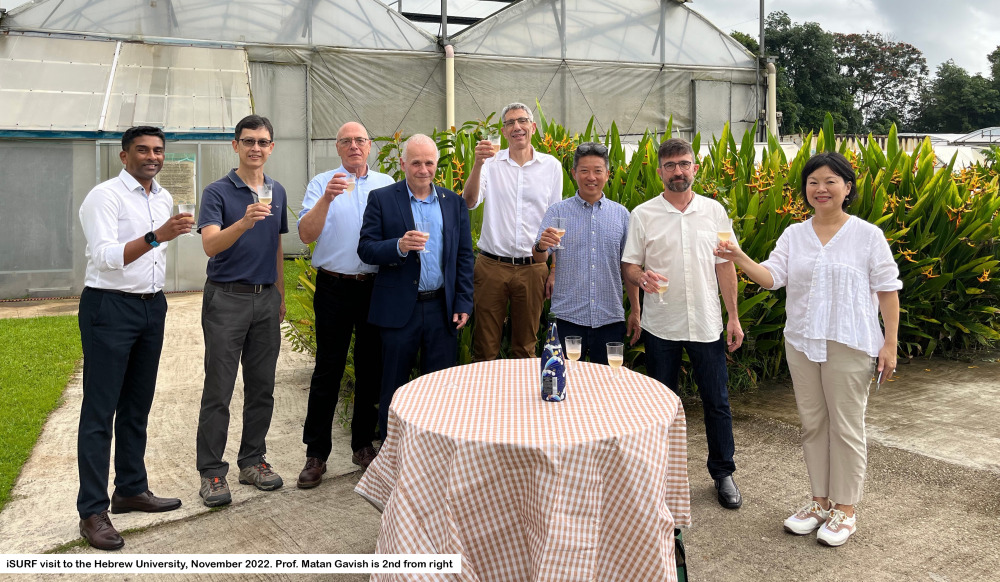
iSURF visit to HU

A project was started in Singapore, a tiny island city-state similar Israel: it is small, lacking in natural resources, and has an innovation-based economy. But unlike Israel, Singapore imports nearly its entire food supply, and has very little agricultural land. This is cause for concern in the face of possible food shortages in the coming decades. To meet this challenge, Singapore is investing significantly in aquaculture, urban agriculture, and alternative proteins – with the goal of producing 30% of their food by 2030.

The Singaporean research authority CREATE developed strategic partnerships with select institutions worldwide, including the Hebrew University of Jerusalem. A joint Israel-Singapore team with colleagues in both countries–Hebrew University in Israel and NTU in Singapore–applied for a highly competitive research grant from CREATE. “It was a Hail Mary,” says Prof. Gavish. “To the best of our knowledge, nothing like our proposed research facility existed anywhere in the world.”

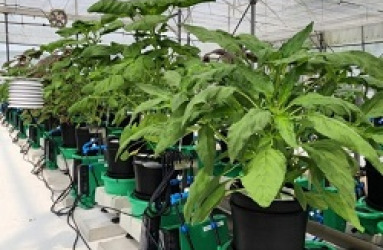
the team is now building Israel-Singapore URban Farm (ISURF), a research facility in Singapore that conducts experiments in real-world tropical urban farm conditions, monitoring and measuring the crops as they grow in the Singaporean climate. “This is very exciting”, says Prof. Gavish. The cutting edge experiments we will run in ISURF could be very meaningful for tropical urban food production.

Published: July 26, 2023
Read Less
sheera_adar250.png

Combatting Cancer by Mapping Gene Damage and Repair

The genes and hereditary material that we carry in our cells are made up of molecules called DNA. It is DNA that carries the genetic information that allows us to function.

Read More
DNA can be damaged by external factors, like the sun and radiation, but also by “natural” internal errors. Our cells have a built-in ability to repair damaged DNA, but when DNA repair mechanisms fail, mutations may result, increasing the risk of cancer and other diseases.


Dr. Sheera Adar

Using sophisticated bioinformatic analysis to examine DNA in vast numbers of cells, Dr. Sheera Adar, of the Department of Microbiology and Molecular Genetics, aims to better understand DNA damage and repair and ultimately to advance effective, personalized cancer prevention and treatment.  

We aim to understand how DNA damage, formation and repair occur in the human nucleus, how repair is coordinated with genome function, and the processes that are meant to prevent mutations but sometimes fail.” explains Dr. Adar.

She and her team use both experimental and computational methods to study DNA damage and repair and their effect on mutations and cancer, with an emphasis on lung, skin, and ovarian cancer.

In just one example, Dr. Adar’s lab investigated a DNA repair mechanism called nucleotide excision repair. The nucleotide excision repair pathway protects cells from carcinogenic damage induced by UV radiation or smoking. Intriguingly, it can also help cancer cells overcome damage caused by cisplatin chemotherapy treatment used to treat ovarian cancer.

By investigating DNA damage and repair mechanisms Dr. Adar’s work helps identify cancer-risk biomarkers that will lead to earlier cancer detection and help identify novel targets for personalized cancer treatment.

Published: August 10, 2023
Read Less
image

The Power of Education: Unlocking Our True Potential

I am a Bedouin. I grew up herding goats. My parents are illiterate and I’m one of fifteen children.

Read More

This may sound like the distant past, but it is not. The fact that I am writing these lines today – writing! – attests to the amazing transformations that I’ve experienced over the last thirty years, made possible entirely by education.

By Dr. Muhammad Al-Nabari

* * *

I am a Bedouin and I hold a doctorate in chemistry. But wait, I’m getting ahead of myself. I’d always been a good student. When I was fourteen, my life changed dramatically. My eldest brother, who never had the opportunity to earn a higher education, decided to support me and send me to a top-notch high school. There was nothing in the Negev. Anyone serious about pursuing an education had to travel north. I was sent to Jatt, which was considered one of the best schools.

The first day of school, the English teacher asked me, “Tell me about your village.” I was silent. I didn’t know how to answer. I didn’t have a village, only an encampment. He mistook my silence for ignorance and shouted, “What are you even doing here? Did you come all the way from the south to sit silently?” His words were sharp, they hurt. I was determined to prove myself.

Dr. Muhammad Al-Nabari
Dr. Al-Nabari as a graduate student, in his chemistry lab at the Hebrew University

I worked hard, fully dedicating myself to my studies. I shared an apartment with classmates. It was like living in the dorms, but we were teenagers. At that age, you either grow up fast or wander. I matured a lot; it was a wonderful period in my life. I visited my family once a month. Friday was our day off, but I couldn’t make the round trip in a single day. I’d skip class on Thursday and spend the day traveling by bus. I’d have a few precious hours and spend the night. By early Friday morning I’d be back on the road, heading back north.

I was set on attending university. In eleventh grade I took the psychometric exam and scored well. But I needed money. After graduating high school with top marks, I spent a year working in agriculture. Eleven, twelve hours of backbreaking work in the sun. I learned Hebrew in the field, and attended English classes at night.

After a year, I had saved enough money and was accepted to Hebrew University to study chemistry.

* * *

I arrived on the Givat Ram campus in the summer of 1989 for an intensive English summer program. I lived in the HaElef dorms, nothing like the dorms you’d find at the University today, shacks really. Tiny rooms with shared bathrooms and sinks – and, as it turned out, leaky roofs. Mid-winter I moved to better dorms.

Chemistry requires a lot of math and physics. I was always good at math, but physics had never been my strong suit. There were about twenty-five Arab students, we became friends and would study together. Later, working in the lab, I had a more diverse group of friends.

I’d go home once a month. The night before, I’d stay up studying until dawn. At 6:30am I’d be outside the University gate to catch the direct bus to Beersheva. The driver knew me, he’d let me off along the highway. The same happened on Sundays; the Jerusalem-bound driver knew to look for me at the side of the road and would pick me up.

Initially, tuition took up half of my father’s income. In my second semester, Hebrew University gave me a scholarship that covered most of my expenses. This alleviated the burden on my family and enabled me to study without working. I needed to earn high enough grades to continue to graduate studies.

I completed my master’s degree in Prof. Yehuda Knobler’s lab, synthesizing peptides using unconventional methods. I could spend entire days in the lab, immersed in my work. But the days I had to teach – I would be wiped out. I knew I’d never teach. My future would be in industry and research.

By that time, I had more flexibility and owned a car. I traveled south more often, maintaining and fostering my ties in the Negev and in Hura. I was involved in founding the first Association of Bedouin Academics. For a decade, I volunteered to head a local non-profit organization that promoted academic education for Bedouins and opened the first six daycare centers in Hura. We dreamt of establishing a school for excellence.

I spent five wonderful years at Hebrew University, thriving in its academic eco-system. I grew as a person, I developed as a scientist, and was already becoming a role model in my community. Those were not easy years – Jerusalem and the country were undergoing turmoil. But I found serenity on campus, in the lab. Working together, side by side, is the best way to break down barriers.


I opted for doctoral studies closer to home, at Ben-Gurion University. It was more like a job. I’d spend the day in the lab, then go home to my wife and children. After completing my doctorate, I joined ChemAgis (today Perrigo) as head of the R&D division. I’d been working on a particular task for six months to no avail. My predecessor had been stumped for four years. I called a colleague from Prof. Knobler’s lab to talk about the problem, and he suggested a different approach, using benzyl chloroformate. As luck had it, he had some in the lab. I drove like a madman – we met mid-way. I raced back to try it out. Eureka! It worked and we beat our Japanese competitors to market. I left industry after only three and a half years, with six patents to my name, and six joint patents.

Moving back to the Negev was moving home. By then there was a sizable community of Hura residents studying and working. Many were academics. We would get together, talk about ways to improve Hura. It was decided that I should run for head of the local council. It sounded preposterous, but I did – and won! I went on to win three more elections, remaining in office for 14 years.

I was an outsider, with no experience in the public sector. That ended up being to my advantage. I suddenly had access to resources and was in a position to foster partnerships. By then, Hura was a small municipality. It was one of the poorest towns in Israel, with a small municipal budget, rampant crime, and almost no municipal services. Over the course of my terms, I increased municipal tax collection, installed security cameras, opened a municipal hotline, and grew Hura’s budget fourfold. Residents became proud of Hura. But improving the present wasn’t enough – I had to create a better future. Employment and education were key.

I re-established the Association of Bedouin Academics and opened an R&D center for Bedouins. I founded, along with partners, a catering service that employs local women to cook for schools, built a sewage purification plant, and opened a nationwide, Arabic language telephone support center. But the true shift wasn’t merely creating employment opportunities – it was an innovative approach: helping the weakest members of society by developing solutions, rather than merely describing the problem. I transformed Hura into a beta site for testing government programs. We were able to develop and implement programs that demonstrated myriad ways for improving people’s lives.

Most importantly, I was finally able to open the school for scientific excellence that we had dreamt of a decade earlier – the first serving Bedouin students. Thirty years ago, who would have believed that we’d have such a school in the Negev, in Hura? In 2013 students from this school won the gold and silver medals in the First Step to Nobel Prize in Physics competition. Imagine that – students who live in tents without electricity! By the end of my time in office, over 50% of the Bedouin STEM students at Ben-Gurion University were Hura graduates.

I strongly believe that the Bedouins will be, must be, the engine behind the Negev’s development and economic growth. There is huge potential: 80% of the Bedouin population is under the age of 30 and the median age is 17 years old. We are witnessing radical transitions: from tribal belonging to spatial, urban affinity. From sheikh rule to democratic rule. Rather than evolving, we’re accelerating. As any scientist knows, acceleration can lead to instability. But the Bedouin community is brimming with potential. With good education, anything is possible.

I decided against running for a fourth term and am focusing my energy on the national level. I founded two initiatives: Yanabia (Springs), which models five areas of life critical for economic growth, and Desert Stars, which is training the future generation of Bedouin leaders – shifting their thinking to encompass the entire Bedouin community, rather than along tribal lines.

I am a Bedouin and I am proud. Proud of my heritage and my values – the same values that my father, and my grandfather before him, were raised with. I aspire to pass these values onto my own children, a valuable gift passing through the generations.

I am a Bedouin and I am a leader – leading my community into the 21st century. I’m proud of my accomplishments thus far, and am excited for the challenges that lie ahead. I will strive, struggle, and succeed. I know I can do it – after all, I am a Hebrew University alumnus!

Celebrating an international sustainable project
Dr. Al-Nabari (left) celebrating an international sustainable development project with the
former Minister of Agriculture, Mr. Yair Shamir (2nd left) and Prof. Michael Ben-Eli (center) 
Published: September 20, 2023
Read Less
civil_engagement_250.jpg

Remarkable Civil Engagement in Israel

The Institute for the Study of Civil Society and Philanthropy at the Hebrew University has just released an extensive report on "Civil Society Engagement in Israel During the Iron Swords War."

Read More

In the first two weeks of the conflict, Israel witnessed an unprecedented surge in volunteerism, with an astonishing 48.6% of the population actively participating—a notable increase from previous crises. 


Learn more about this extraordinary civil engagement in our article here: 

Half of Israelis Volunteered in First Two Weeks of Iron Swords War

A shining example of this unity, ten international students from Rothberg International School at the Hebrew University of Jerusalem collaborated with the Human Front community organization to provide support to Jerusalem residents affected by the war. These dedicated students prepared meals for those in need, meticulously chopping hundreds of vegetables, cooking large quantities of rice and pasta, and crafting generous servings of antipasto, salads, and sauces, benefiting approximately 160 individuals.

Hebrew University at the Front


Explore their heartwarming efforts in the images below showcasing the international students in action. 

Thanks to all our wonderful volunteers!

Photos: https://huji.canto.global/b/VQNMO

Published: November 6, 2023 
Read Less
hujifront250.png

The Hebrew University at the Front in Wartime

The Hebrew University’s Human Resources Division, the Dean of Students, and the Marketing Division are proud to present what the Hebrew University has been doing to help the community during these challenging times.


image

Strasal Scholar Follows His Dream, Improves Human Health

At 23 years old, Aseel Gadban has an impressive list of accomplishments under his belt.

Read More

He applied to Hebrew University against all odds, studied in a language he does not speak at home, completed two degrees within four years, repeatedly made the Dean’s List, started a PhD at the age of 22, and has become a role model in his community.

Aseel was born to educated parents and grew up in the Druze village of Hurfeish. Good students were expected to choose either medicine, law, or engineering. In fact, until the 11th grade, Aseel was set on studying medicine. But then he had a change of heart. “I didn’t want a doctor’s lifestyle,” he recalls. He had always loved biology, discovering the unknown. “Biologists are the engineers,” he jokes, “and doctors just implement their findings.”

While the Druze community does serve in the military, Aseel received a medical exemption. He knew that his next step would be higher education, and he was encouraged to study closer to home, where he would surely earn top marks. In particular, he was warned against Hebrew University – it was too hard, people said. Not one to follow the herd, he went online and registered at Hebrew University.

He found himself, 17 years old, living in Jerusalem, and studying biology in Hebrew. “We learned Hebrew in school,” he explains. “We just didn’t learn to use it.” He completed his BSc within 2.5 years, and then joined an accelerated MSc track towards the end of his studies, and he was selected to receive a generous scholarship from the Strasal Foundation.

"Not only did the scholarship allow me to dedicate myself to my studies, but it actually motivated me to work even harder! When I heard I would receive the merit-based Strasal scholarship, I felt that my hard work and accomplishments were recognized. The Strasal scholarship encouraged me to aim even higher!

Aseel discovered his interest in stem cells and embryology in Prof. Nissim Benvenisty’s lab, where he completed his doctoral research. The next decision was easy: Aseel decided to continue to doctoral studies.

Aseel is working on two research projects. The first focuses on the FMR1 gene which, when silenced (inactive), causes Fragile X Syndrome. He is working on identifying chemical ways to reactivate the gene in vitro.

 His second research project is in parental imprinting, which determines whether specific genes (from either  the sperm or the egg) are expressed. When improperly executed, the embryo can develop any number of  imprinting disorders, such as Prader-Willi syndrome, Angelman syndrome, or others. Aseel is trying to identify  specific regulators that affect imprinting, to provide insight into this process and offer a path towards a cure.

 His scholarships make it possible for Aseel to devote all his attention to his studies. “I was making a living as a  tutor. Now everything I do is on campus. Even as a teaching assistant, my mind is wrapped around my own  research.”  

 Every year, Aseel is invited to address students at his old high school. He tells them to listen to their hearts. “Follow what you love,” he tells them. “You can be whatever you want to be.” In fact, since he enrolled at Hebrew University, additional students from his village, and the Druze community, have followed in his footsteps – including his brother.

Today there are about 100 Druze students on campus, and they meet regularly through a studen club, Sabil (“path”). “I love hanging out with other Druze students, since we’re a minority within a minority. I still feel connected to my village, even when I’m in Jerusalem,” he says.

Published: June 2, 2024
Read Less
shirel250.png

My Strasal Scholarship is Show of Faith in My Work

Shirel Schreiber spends most of her time on her computer in the lab, uncovering the role genes play in the chances of people developing diseases.

Read More

Seeking to make such a connection, the Bioinformatics lab where Shirel works makes use of genetic data from hundreds of thousands of people, provided by a British biobank or “database” of voluntarily provided information.

An algorithm created several years ago is then applied to the genetic data in order to indicate any association between the gene and the development of a disease, based on the variations of the population in the biobank.

Strasal

The 22-year-old biologist was born in Belgium but grew up in Israel. She made her way to Hebrew University after completing her undergraduate degree at the Jerusalem College of Technology, where she studied bioinformatics - using science, statistics, and math to analyze vast amounts of biological data.

After her bachelor’s, Shirel gave much thought to whether she wanted to use her knowledge in the working world, or to advance her studies. She quickly came to the conclusion that striking out in her field without further studies was a “little risky,” and decided to pursue her master's degree.

Shirel has high praise for the program and the ethos at Hebrew University, which the budding biologist encourages both collaborative and independent work.

“There is a very good atmosphere of research,” she says. “There is freedom of research; everyone can work on what they like or are interested in. And everyone is here for the science, which is fun.”

Shirel also highlights the constant cooperation between research labs and readiness to consult with one another, as well as the seminars that take place weekly, which are designed to expand the students’ knowledge in their field.

Crucially, as a postgraduate master’s research student in her chosen field of biology, Shirel’s scholarship means she can focus solely on her research without having to fund her studies with a job.

“It gives you peace of mind to know that while you are studying, money is not a primary concern,” she says.

And for that Shirel is eminently grateful. The donors who make the scholarships possible should know that it really gives the students freedom to focus, she says.

“It is a sign of faith - there is belief in you, that you are doing something worthy.” 

Published: January 22, 2026
Read Less